THE SOLUTION

Digital certification with a TRIPLE verification key: digital and physical
Ab Originis, which in Latin means “from the origin” or “from the very beginning”. It is used in everyday language, as well as in legal and literary contexts, to indicate something that has validity, a flaw, or value from the very moment of its creation.
We have applied the meaning of the term Ab Originis to the ability to certify any item as authentic from the moment of its creation. The evolution of this concept enables the creation of both digital and physical certification services designed to protect the owner of the asset—whether tangible or intangible—or the individual who purchases the asset or uses the service.
The Ab Originis platform eliminates any possibility of counterfeiting by adopting the principle of double verification—that is, the generation of a digitized and notarized file and its confirmation through a physical anti-counterfeiting process.
Through this solution, Ab Originis enables the tracking of production chains and prevents the counterfeiting of any product—from food to precious goods, pharmaceuticals, and clothing, all the way to intangible assets such as voice recordings, videos, intellectual concepts, and much, much more.

Trademark Protection Consulting
The certification project begins with verification processes differentiated according to the nature of the activity.
Let us take as an example the evaluation of an application for certification by a company that wants to strengthen its identity by also emphasising ethical elements.
Let’s start with the SAQ (Self Assessment Questionnaire), which involves both the company to be certified and the main supplier companies.
Based on the SAQ review, an AUDIT programme is prepared that allows for the verification and review of business steps, which in case of approval allows for the award of AB Originis Certification.
Our Tokenization Platform
Discover what we built
How is the AbOriginis certification structured?
The elements that characterize the AbOriginis certification are simple and essential, as they rely on digital notarization as a validation mechanism.
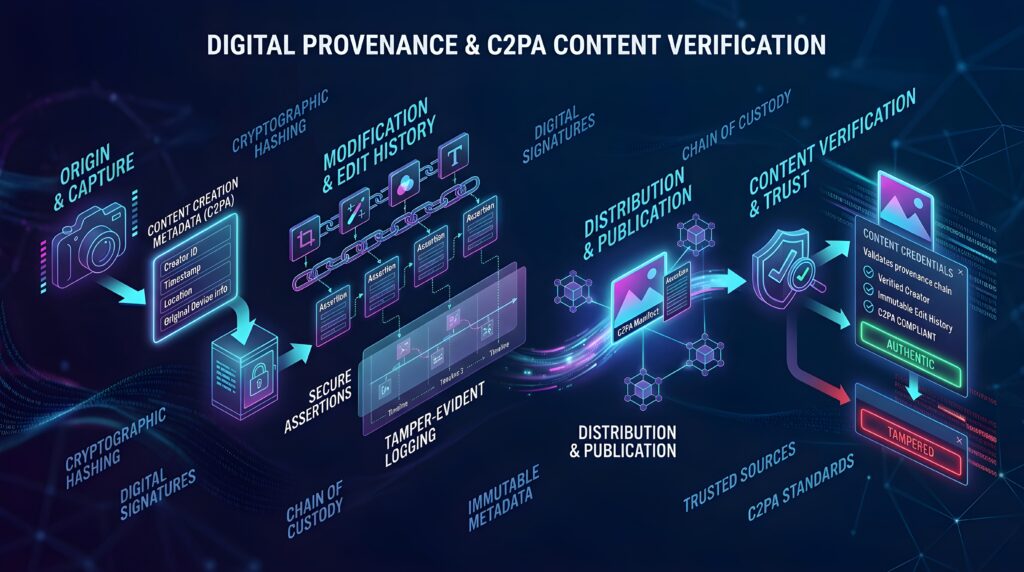
The certification service is based on the principle of double verification across two distinct concepts. The first element involves the notarization and subsequent digitization of the descriptive elements of the good or service, thereby identifying its nature and/or characteristics. From this process emerges a document that encapsulates and describes the information intended for dissemination, including diverse attributes and descriptions.
The second certification step is completely separate from the first, ensuring that the certification data cannot be altered. It is based on a physical element that cannot be altered or, if altered, is no longer valid.
The combination of these two verification phases generates a unique certification product that enables multiple applications and attestations capable of unequivocally certifying the originality of the product or service.
The QR code serves exclusively as a link between the two verification stages but has no certification attributes; only the verification stages—digital and physical—when consistent, allow for the verification of the certification of origin.
There are various information and certification options dictated by the company’s commercial needs, which can be customized with a wide range of flexible solutions.
The consumer/purchaser of the product can easily verify the AbOriginis certificate by scanning the QR code and verifying the underlying code.
Technological innovation is applied to the management of our daily lives, bringing about a revolution that provides absolute certainty regarding the UNIQUENESS and VALIDITY of what is certified.
These two adjectives, though simple and common, can completely overturn the concept we have had until now of Origin and Original. In fact, how can we be certain that an object, a food item, or a document is actually an original and not a fake?
The Certificate of Origin establishes the global uniqueness of that item; if replicated for the purpose of counterfeiting, it is deemed a fake because that object has already been indexed and registered to its rightful owner. With Ab Originis, we achieve the greatest deterrent against the counterfeiting of any goods, production chains, commercial documentation, the transit of goods, and much more. The solution also applies to document exchange, enabling the electronic transmission of contractual documents that are, in effect, originals and also the only existing copy.
The Certificate of Origin establishes the global uniqueness of that item; if replicated for the purpose of counterfeiting, it is deemed a fake because that object has already been indexed and registered to its rightful owner. With Ab Originis, we achieve the greatest deterrent against the counterfeiting of any goods, production chains, commercial documentation, the transit of goods, and much more. The solution also applies to document exchange, enabling the electronic transmission of contractual documents that are, in effect, originals and also the only existing copy.


Services
of the application of the European UNI EN ISO certification system to digital and fisical keys
EXAMPLE:
UNI EN ISO 22005 – Certification of the Traceability System in the Food and Feed Chain.
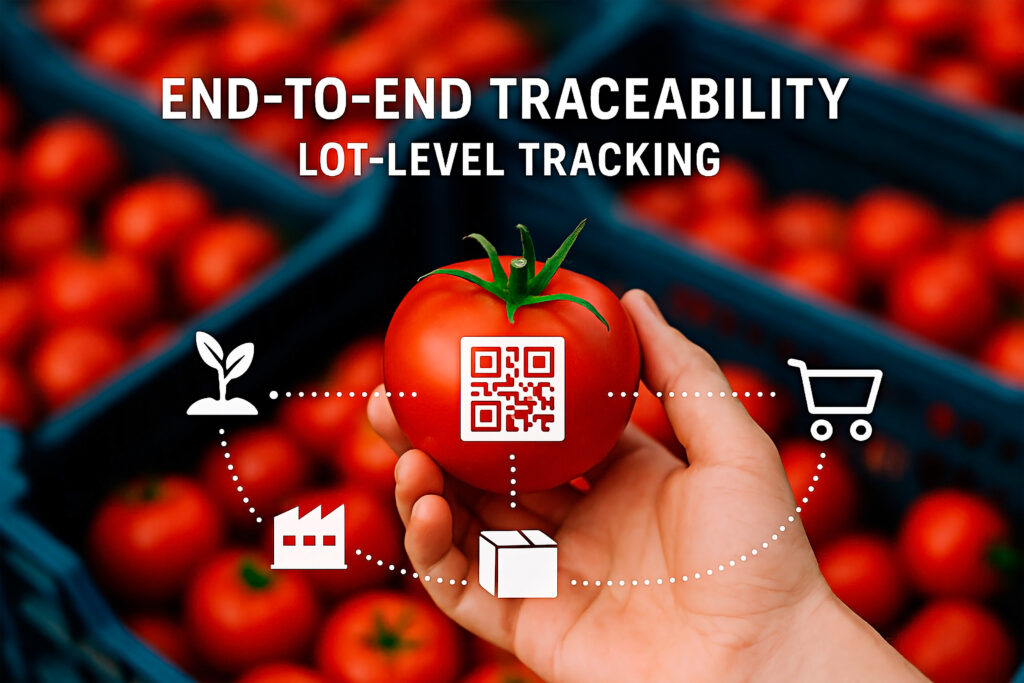
The ABORIGINS certification applies to the entire supply chain or to specific sections of it, across a wide range of sectors, from animal feed to meat and food products. The standard’s objective is to help companies document a product’s history, ensuring it can be traced back to its place of origin at any time.
In practice, tracking each production batch throughout the supply chain—and thus making it traceable—involves carrying out a series of operations aimed at collecting the data generated every time a production stage is completed along the supply chain, wherever it may be.
The voluntary ISO 22000 and 22005 standards on traceability are also in high demand as a requirement for demonstrating the origin of products and the raw materials used.
In fact, the standard bases its principles on the ability of an organization, defined as the Lead Partner, to establish rules capable of guaranteeing, at every stage of the supply chain, all those elements of quality, food safety, and traceability that are now considered important information for the consumer. Each stakeholder’s commitment to complying with the aforementioned requirements is demonstrated by formal agreements that they must individually sign with the lead organization.
Today, one of the elements considered by consumers to be among the most relevant and valuable is undoubtedly the product’s origin. Precisely because of people’s growing awareness of these aspects of product traceability and safety, the number of companies undertaking the certification process for their supply chain is on the rise, both for products of animal and plant origin, and for industrial production where components are critical to the specifications demanded by the market.
Therefore, to demonstrate this, the lead organization entrusts an independent third party with the verification process throughout the entire supply chain.
Example – The food supply chain. The sectors most sensitive to such certification are certainly the food supply chains (e.g., the canned food industry (tomatoes), the production of extra virgin olive oil for the plant-based sector, and the dairy supply chains for the animal-based sector) . But that’s not all: companies and the market face an increasing number of requirements or demands to meet, originating from the pharmaceutical, medical, electronics, fashion, and quality processing sectors.
Furthermore, it is important to emphasize how certification helps ensure consumer safety and protect them from potential food fraud, particularly regarding the product’s origin.
The certification process involves the following steps, which AbOriginis carries out through its own structure:
request for a quote
acceptance of the quote
conducting a preliminary audit (optional)
conducting a certification audit (divided into two phases)
management of any non-conformities identified
certification decision
annual maintenance checks.
The design of a traceability system must necessarily define the following aspects:
objectives of the traceability system
regulations and documents applicable to the traceability system
products and ingredients subject to traceability
position of each organization in the food supply chain, identification of suppliers and customers
flows of materials
information to be managed
procedures
methods for managing the supply chai